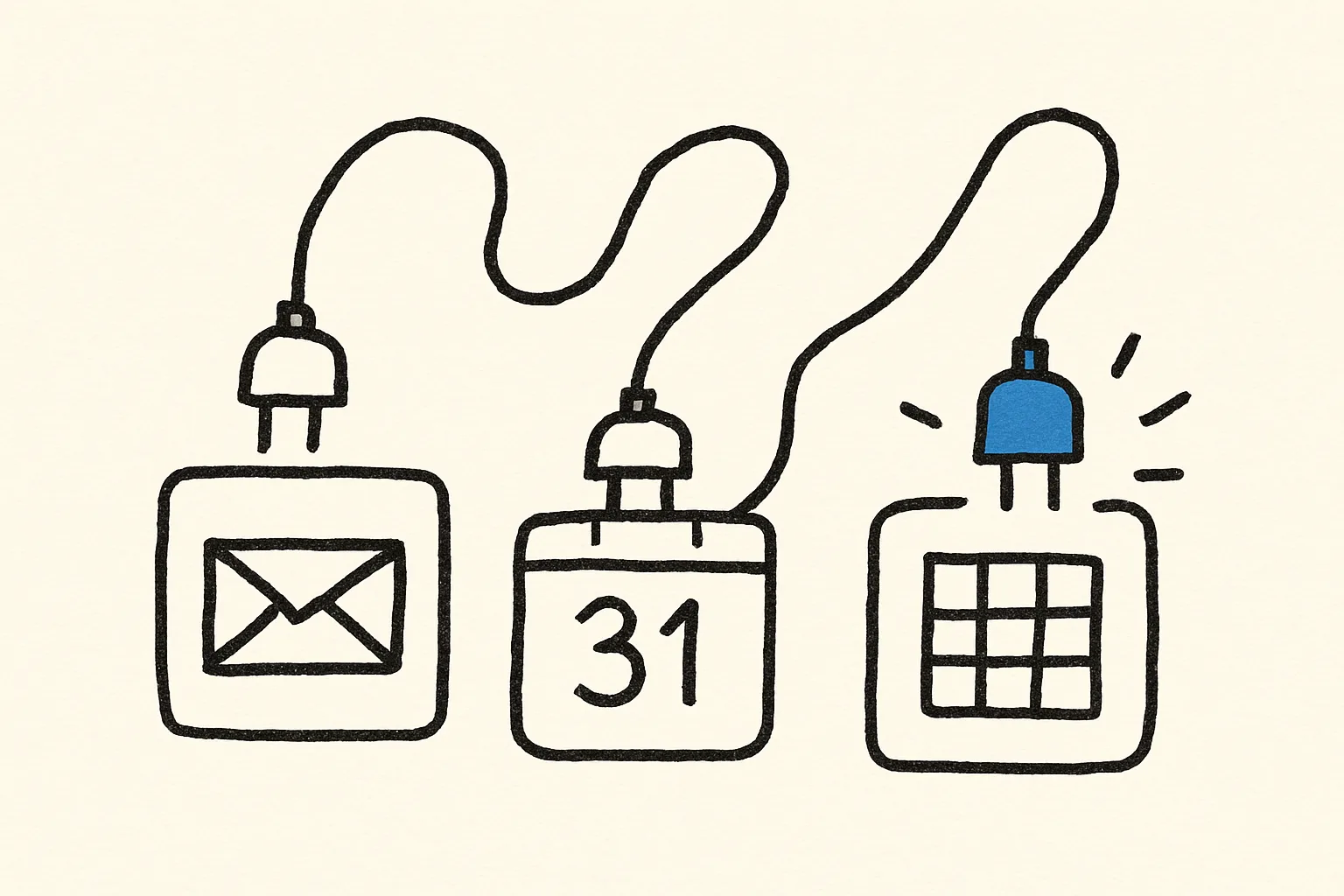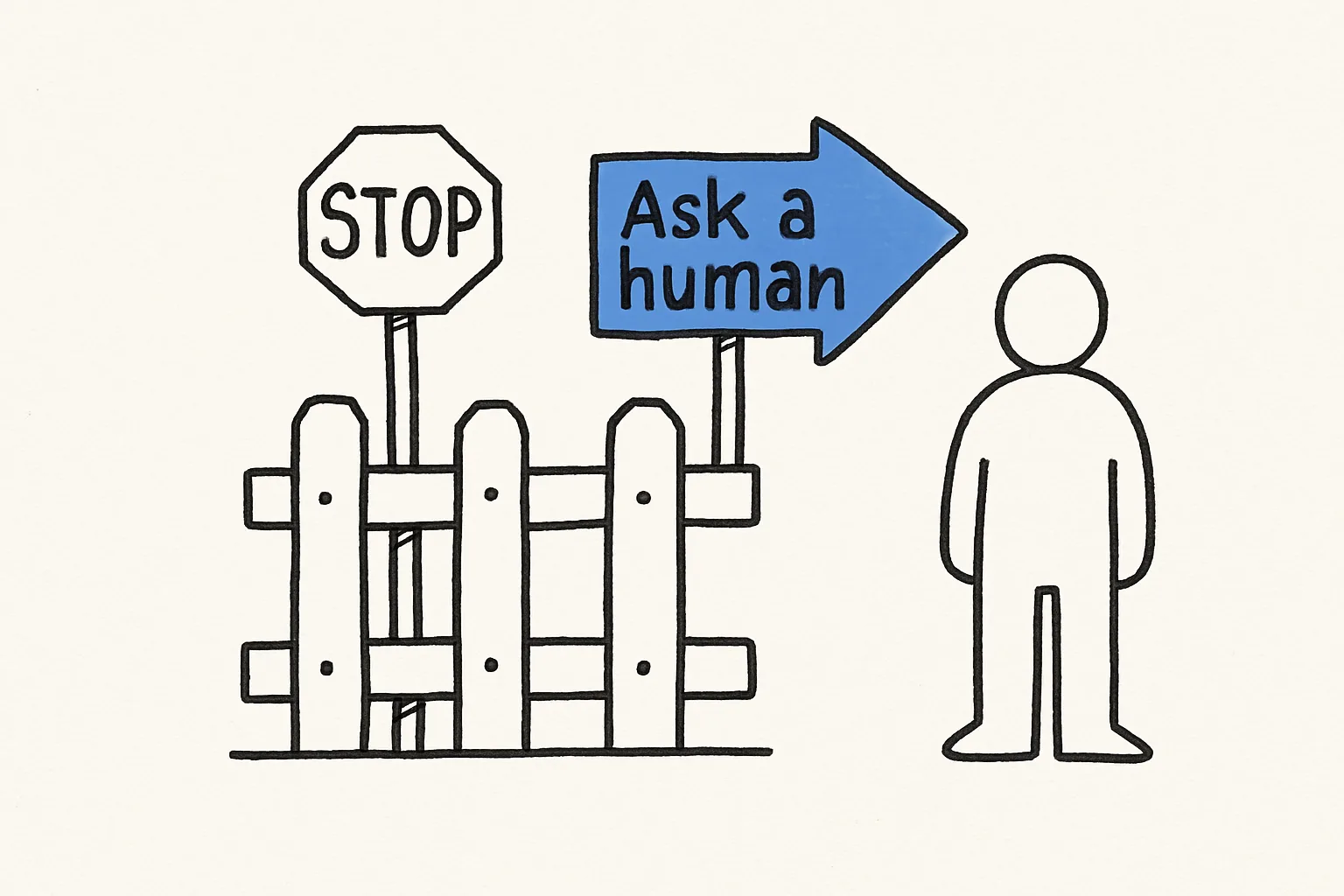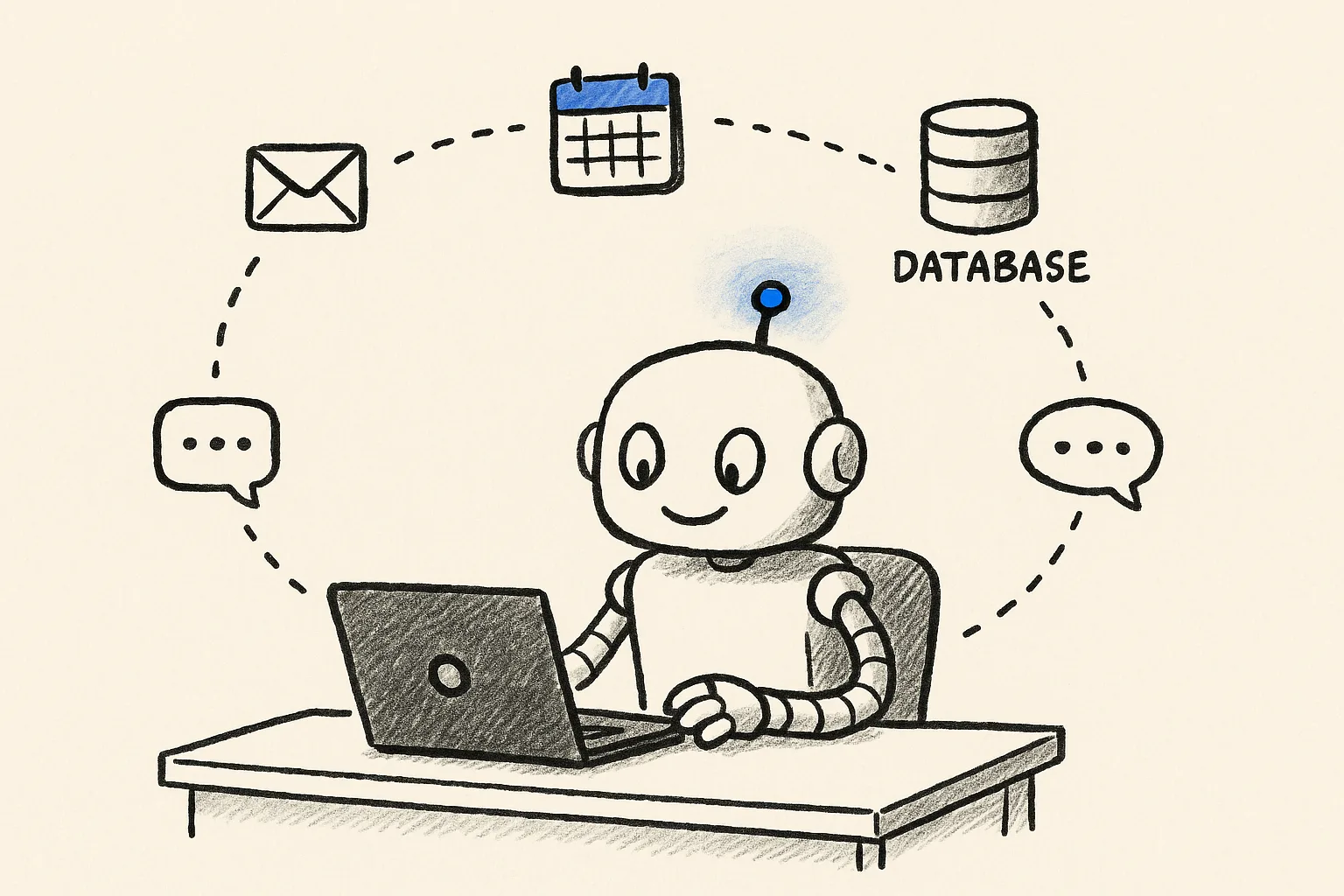
An AI agent is a language model that can do things, not just talk: look something up, write to a database, send a message, book a meeting. The model decides which tool to use; you decide which tools it has and what it must never do.
That second half is where most agents succeed or fail. A good agent is less about clever prompting and more about a narrow job, the right data, and clear limits.
Pick a job, not a personality
Agents work best on jobs that are frequent, text-shaped, and have a clear right answer:
- answering customer questions from your docs
- triaging inbound leads or support tickets
- turning meeting notes into tasks
- answering the phone and booking appointments
- pulling a weekly report from your tools
They work worst on one-off judgement calls with no ground truth. Start with one job you can describe in a sentence.
Three ways to build one
| Approach | Good for | The catch |
|---|---|---|
| Code it yourself (SDKs, frameworks) | Engineering teams | Weeks of work; you host and maintain it |
| Workflow tools (node graphs) | Fixed, predictable sequences | Brittle when the input varies |
| Describe it in Something | Most business agents | Less control over the model internals |
The guides for specific agents
Once you've built a first agent, these guides go deeper on common ones: AI receptionist, chatbot for your website, customer support agent and lead triage.
Mistakes to avoid
- One agent for five jobs. An agent asked to do support, sales and reporting does all three badly. Split it.
- Connecting every tool "just in case". Each extra tool is one more wrong action it can take. Add tools when a real conversation needs them.
- Testing only the happy path. Ask it the questions it should refuse. That's where agents go wrong in front of customers.