
AI coding agents can write hundreds of lines of code, modify multiple files, and fix errors without a developer manually touching every line. Yet they can still make a surprisingly simple mistake: changing one part of an application without understanding what depends on it.
The problem is not always that the model cannot write good code. Sometimes, it does not understand the system into which that code must fit.
This distinction matters because real software engineering is rarely about solving one isolated programming problem. It is about making changes inside systems that have grown over months or years, with dependencies, conventions, assumptions, and decisions that are not always documented.
And that is where AI coding agents often struggle.
The Code Makes Sense, but the Change Does Not
One of the most confusing experiences with an AI coding agent is receiving code that looks perfectly reasonable but breaks something elsewhere in the application.
Imagine asking an agent to update a user profile feature. It finds the relevant component, changes the form, and updates the API request. The implementation looks clean, and the page works in a quick manual check.
But the application also has a shared validation function used by the account settings page. The agent changes that function to accommodate the new profile form, unintentionally altering how account settings behave.
The problem was not necessarily the quality of the new code. The problem was that the agent failed to account for the relationship between the code it changed and the rest of the application.
This is the difference between understanding a file and understanding a codebase. One requires reading code. The other requires understanding how the pieces depend on one another.
A Codebase Is More Than Its Source Files
A mature application contains far more information than the code visible in a single file.
There are API contracts, database schemas, environment variables, shared utilities, package versions, test fixtures, deployment requirements, and conventions established by earlier developers. Some of these are documented. Others exist only in the way the application behaves.
A human engineer gradually builds a mental model of these relationships through experience. They learn why a particular function exists, which modules depend on it, and which changes are likely to have unexpected consequences.
An AI agent has to reconstruct that understanding from the information it can access during a task.
Even when the entire repository is available, that does not mean the agent has meaningfully understood every relevant relationship. It may inspect the wrong files, overlook an important dependency, or focus on the implementation while missing the reason behind it.
Research published at the 2026 IEEE/ACM International Conference on Program Comprehension examined human-AI collaboration in codebase understanding and highlighted that large, unfamiliar codebases remain challenging even when developers have assistance from language models.
The takeaway is important: access to code is not the same as understanding the system.
The Context Window Is Not the Same as Project Understanding
When developers discuss AI context, they often focus on the context window, which is the amount of information a model can process in a given interaction.
A larger context window can help an agent consider more files and instructions. But it does not automatically tell the agent which information matters, how different pieces of information relate, or which assumptions are no longer valid.
Consider a repository containing 2,000 files. An agent might have access to a large amount of code, but the task may depend on only six files, two database relationships, and one undocumented behavior.
Giving the agent more files is not necessarily the answer. Giving it the right files, explaining their relationships, and helping it investigate the relevant parts of the system can be much more useful.
This is why context management involves more than increasing the amount of information available to a model. It involves selecting, organizing, and validating that information.
A useful way to think about it is this: a library contains thousands of books, but solving a specific problem requires finding the right pages and understanding how they connect.
AI coding agents face a similar challenge inside a repository.
Why Agents Sometimes Guess Instead of Investigating
AI coding agents are designed to produce useful responses and take actions toward a goal. When the task is poorly understood, an agent may still generate a plausible implementation rather than recognize that it needs more information.
Suppose a developer asks an agent to fix a failing API request. The error message points to a response-handling function, but the actual problem comes from a change in the authentication middleware.
The agent could patch the response handler because that is where the error appears. The change might suppress the immediate symptom without fixing the underlying cause.
A more reliable approach would be to trace the request through the relevant layers, inspect recent changes, examine the authentication flow, and reproduce the failure before editing code.
This is not simply a prompting problem. It is a problem of investigation and evidence.
A 2026 study of AI-generated pull requests in real GitHub repositories found that unsuccessful contributions often involved larger changes, failures in continuous integration, and misalignment with the intended task. The researchers examined tens of thousands of agent-authored pull requests, demonstrating why real repository work is more complicated than generating a correct-looking snippet.
An agent should not be judged only by whether it can produce an answer. It should also be judged by whether it investigates the problem before deciding what the answer should be.
Small Changes Can Have Surprisingly Large Consequences
Software dependencies create a challenge that becomes more important as AI agents modify more code.
A single function may be used by several components. A shared type may define how data moves between services. A database field may be referenced by an API, a background job, and a reporting process.
Changing one of these elements can affect the entire application.
For example, imagine an agent renaming a field from userId to accountId. The change may appear straightforward in the file where the field is defined. But other services, database queries, test fixtures, or external integrations may still expect the original name.
If the agent updates only the files it initially identifies, the application may compile while failing at runtime in an untested workflow.
A study published in the 2026 IEEE/ACM International Conference on Mining Software Repositories examined reverted changes introduced by AI coding agents. Its analysis identified unintended side effects, overengineering, functional incorrectness, and dependency-management problems among the recurring reasons changes were reversed.
The lesson is not that agents should avoid modifying multiple files. Many legitimate features require exactly that. The lesson is that the scope of a change must be understood before implementation begins.
Why Adding More Instructions Can Make Things Worse
When an AI agent repeatedly makes mistakes, a natural reaction is to add more instructions.
Developers create longer prompts, add extensive repository documentation, and write detailed rules covering every situation they can imagine. Some of these improvements are genuinely useful, especially when they explain important architecture or project conventions.
But instructions can also become outdated, repetitive, contradictory, or irrelevant to the current task.
A research study published in February 2026 examined repository-level context files such as AGENTS.md. Its findings challenged the assumption that adding these files always improves coding-agent performance. In the evaluated settings, context files sometimes reduced task success and increased inference costs, particularly when they introduced unnecessary requirements.
This suggests that context quality matters more than context volume.
A useful project instruction might explain how to run tests, which package manager the repository uses, where shared components live, and which architectural boundaries must be respected.
A less useful instruction file might repeat generic advice, describe a workflow the project no longer follows, or force every task through irrelevant steps.
The objective should be to give an agent the minimum reliable context it needs to make good decisions, then let it inspect the code when more information is required.
How to Help AI Understand a Codebase Better
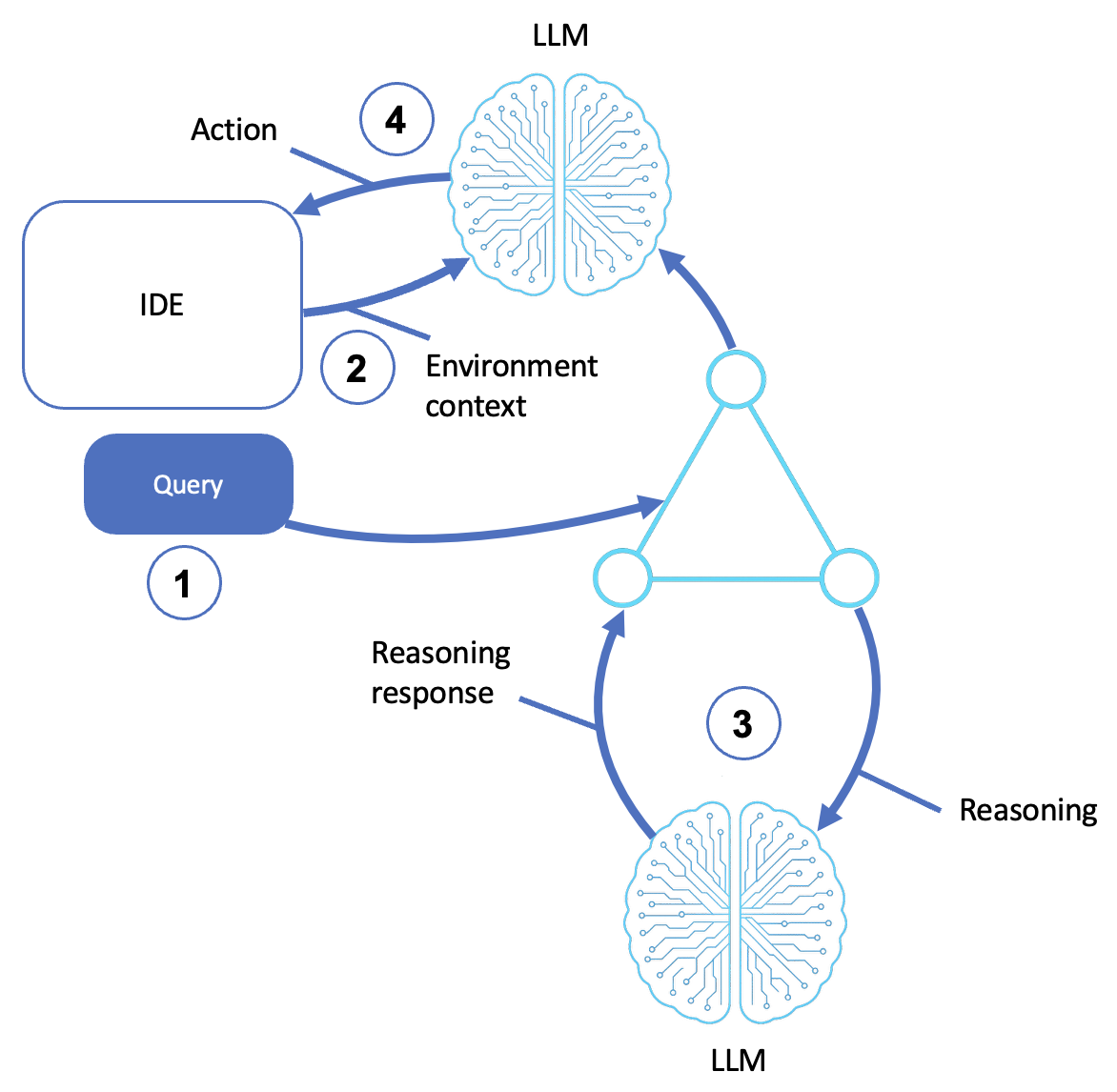
The solution is not to write a massive prompt before every task. It is to design a workflow that encourages the agent to build an accurate picture of the system before changing it.
Start with investigation, not implementation
Ask the agent to inspect the relevant files, trace dependencies, find existing tests, and explain how the current implementation works before proposing a change.
For a bug, it should identify the observed behavior, the expected behavior, and the evidence supporting its suspected cause. If the evidence is incomplete, it should say what remains unknown.
Keep project instructions concise and accurate
Use repository instructions to document stable information that agents should not need to rediscover repeatedly. Include architecture notes, commands, coding conventions, and important restrictions where appropriate.
Review these files as the project evolves. Outdated instructions can mislead an agent just as easily as missing instructions.
Ask for a plan before large changes
For work involving multiple modules, ask the agent to identify the files it expects to modify and explain why each change is necessary.
Reviewing the plan provides an opportunity to catch misunderstandings before they become dozens of lines of code.
Use tests as evidence
Tests should reflect the intended behavior, not simply confirm that the generated implementation works for one example.
Run relevant tests before and after changes. Where appropriate, add regression tests that reproduce the original failure and verify that it remains fixed.
Passing tests do not prove that every aspect of a system is correct, but they provide a more reliable signal than an agent's explanation alone.
Keep changes focused and reviewable
A small, targeted patch is generally easier to understand than an unnecessarily broad rewrite.
Ask the agent to avoid unrelated refactoring, preserve existing interfaces unless changes are required, and explain any modifications outside the original scope.
The goal is not to minimize the number of changed files at all costs. It is to ensure that every change has a clear reason.
The Real Opportunity Is Better Context Engineering
The next improvement in AI coding will not come only from models becoming better at generating code. It will also come from making engineering environments easier for AI systems to navigate.
That means better repository documentation, searchable code, reliable tests, clear module boundaries, useful error messages, and workflows that encourage agents to inspect their surroundings before acting.
Microsoft's Visual Studio Code documentation now describes ways to configure coding agents with project-specific context and instructions. The guidance emphasizes identifying real problems in a codebase, making focused customizations, and checking whether those changes actually improve agent performance.
This approach is more useful than assuming that one universal prompt will work for every project.
A small frontend application, a large monorepo, and a distributed backend have different structures and different risks. Their AI workflows should reflect those differences.
Context engineering is therefore not about feeding an agent everything. It is about helping it find the information that matters, understand the constraints, and verify its assumptions before making changes.

The Engineer's Job Is to Protect the Bigger Picture
As coding agents become more capable, developers will increasingly delegate implementation work that previously required substantial manual effort.
But delegation does not eliminate responsibility for the result. Someone still needs to understand the architecture, define the expected behavior, identify unacceptable risks, and decide whether the final change belongs in the system.
This is where engineering fundamentals become especially valuable.
A developer who understands APIs, databases, testing, and system design can recognize when an agent is making an unsafe assumption. They can ask better questions, identify missing context, and distinguish a genuine fix from a patch that merely hides a symptom.
The goal is not to make every developer manually inspect every line that AI produces. It is to create a process where important assumptions are visible, changes are testable, and mistakes are caught before they become production problems.
AI can help explore a codebase, but engineering judgment helps determine whether the proposed change makes sense in the larger system.
Conclusion
AI coding agents do not struggle with codebases simply because they lack enough context or need a more clever prompt. They struggle because understanding software requires connecting information, reconstructing intent, tracing dependencies, and recognizing consequences that may not be visible in the file being edited.
Better models will help. Better tools will help. But reliable results also depend on how repositories are structured, how tasks are defined, and how changes are verified.
The real opportunity is to build engineering workflows in which agents investigate before acting, explain their assumptions, and use evidence to correct mistakes.
Because the hardest part of changing software is rarely writing the new code. It is understanding everything that the new code might affect.
"an ai agent can change a thousand lines in seconds. understanding which ten lines should change is the real engineering."
References
- Understanding Codebase Like a Professional! Human-AI Collaboration for Code Comprehension, ICPC 2026
- When AI Code Doesn't Stick: An Empirical Study on Reverted Changes Introduced by AI Coding Agents, MSR 2026
- Where Do AI Coding Agents Fail? An Empirical Study of Failed Agentic Pull Requests in GitHub, MSR 2026
- Evaluating AGENTS.md: Are Repository-Level Context Files Helpful for Coding Agents?, 2026
- Configure AI for Your Codebase, Visual Studio Code Documentation
- Set Up a Context Engineering Flow in VS Code, Visual Studio Code Documentation