
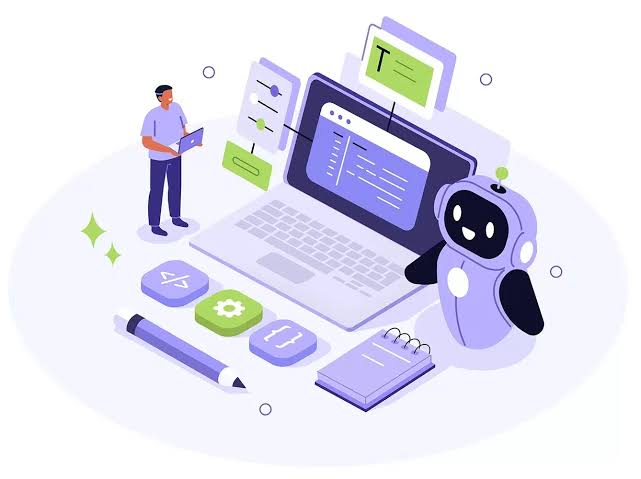
A developer can now build in an afternoon what once took several days of typing. AI can generate functions, explain unfamiliar libraries, suggest fixes, and even work across multiple files in a repository.
But something interesting happens when writing code becomes easier: the difficult parts of engineering become harder to ignore.
Does the code solve the right problem? Can someone maintain it six months later? What happens when an unexpected input breaks it? And how do you know the AI's solution is correct when it sounds completely confident?
These questions point toward a bigger shift in software engineering. As AI takes on more implementation work, the skills that help developers understand, evaluate, and improve software become increasingly important.
The question is no longer just how quickly you can write code. It is how well you can turn generated code into software that works.
The Difference Between Generating Code and Engineering Software
Writing code has always been only one part of building software. Developers also need to understand requirements, design systems, investigate failures, make trade-offs, and ensure that changes do not break existing functionality.
AI changes the amount of effort required for some tasks, but it does not eliminate these responsibilities.
The 2025 Stack Overflow Developer Survey found that 84% of respondents were using or planning to use AI tools in their development process. Yet 46% said they did not trust the accuracy of AI output, compared with 33% who trusted it. Sixty-six percent reported frustration with AI solutions that were almost correct but not quite.
These findings reveal an important tension. Developers are adopting AI, but they still need to evaluate its work.
That is why the most valuable engineering skills are not necessarily the ones AI makes obsolete. They are often the ones that help developers use AI without losing control over the quality of the software.
1. debugging and root-cause analysis
Anyone can ask AI to fix an error. Finding out why the error happened is a different skill.
Imagine an application that crashes whenever a user submits a form. AI might suggest adding a null check, changing a conditional, or adjusting the way data is processed. One of those changes might remove the error without addressing its underlying cause.
Perhaps the frontend sends an unexpected value. Perhaps an API returns an inconsistent response. Perhaps a database query fails under a particular condition. The visible error is only the final symptom of a problem somewhere else.
An engineer who understands debugging can trace the failure through the system, reproduce it, examine logs, test competing explanations, and identify the actual cause before changing the code.
AI can help with every step, but the engineer still needs to judge whether the proposed explanation matches the evidence.
The more code AI can generate, the more valuable it becomes to know which code actually needs changing.
For developers, this means learning to read stack traces, use breakpoints, inspect network requests, understand logs, and build minimal reproductions of bugs. These skills remain useful regardless of which AI tool is popular.
2. system design and architectural thinking
AI can generate a component, an API endpoint, or a database model. Designing how those pieces should fit together requires a broader understanding of the application.
Consider a project that starts as a simple application with a few API routes. Over time, it adds authentication, background jobs, payments, notifications, and external integrations. Each feature introduces relationships and constraints that affect the rest of the system.
An AI assistant can suggest an architecture, but several reasonable designs may exist. One may be simpler to maintain. Another may perform better at scale. A third may fit the team's existing infrastructure and constraints more effectively.
Choosing between them requires understanding trade-offs.
System design helps engineers decide where responsibilities belong, how components communicate, which data should be shared, and where failures might spread. It also helps prevent unnecessary abstractions and overly complicated implementations.
As code generation becomes easier, developers may have more implementation options to consider. That makes the ability to choose a suitable design more important, not less.
You do not need to become a distributed-systems expert before building your first application. Start by understanding modularity, API contracts, database relationships, caching, authentication, and the consequences of changing shared components.
The goal is to understand not just whether a piece of code works, but whether it belongs in the system.
3. code reading and code review
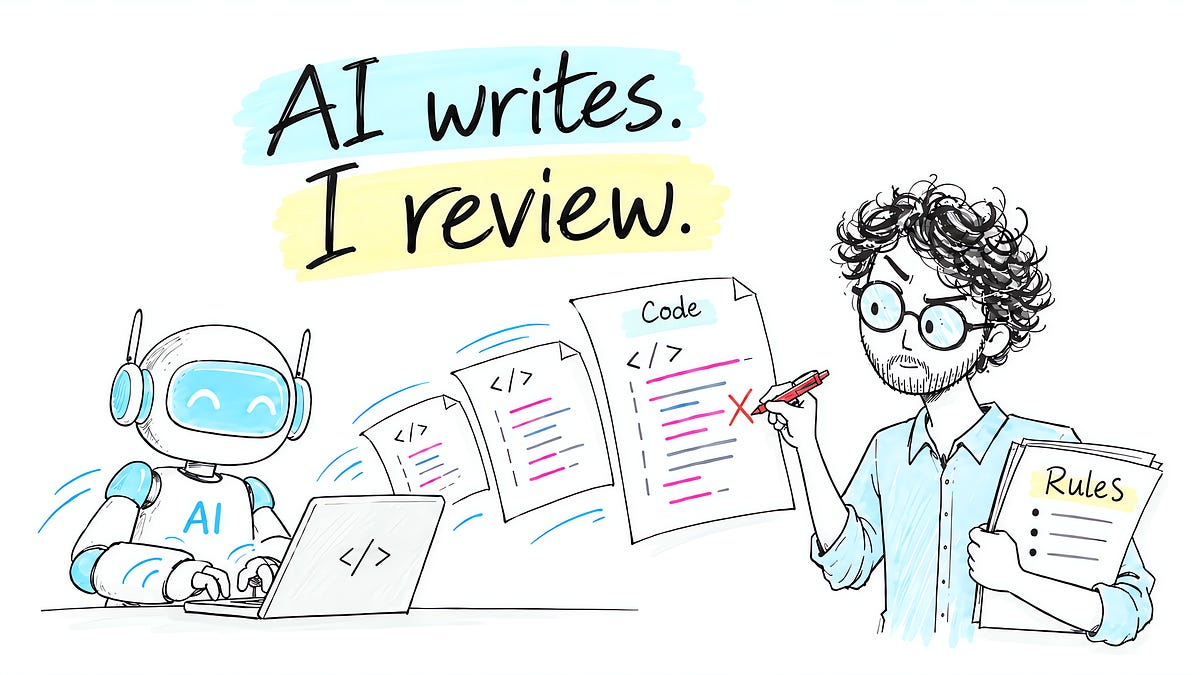
Developers often spend more time understanding existing code than writing new code from scratch. AI does not remove this responsibility. In some cases, it increases the amount of generated code that needs to be evaluated.
Suppose an AI agent creates a feature across twelve files. The application compiles, and the tests pass. That is encouraging, but it does not automatically mean the implementation is correct.
The change might duplicate an existing utility, bypass an important validation rule, introduce a security weakness, or make an unrelated modification that nobody requested.
A strong reviewer can distinguish necessary changes from unnecessary ones. They can ask why a particular abstraction exists, whether an error is handled properly, and whether the implementation follows the project's established conventions.
This is also why reading code remains a fundamental skill even when developers write less of it manually.
A useful habit is to review the diff rather than simply reading the final files. Look at what changed, why it changed, and what the change might affect. Ask AI to explain unfamiliar decisions, but verify its explanations against the actual implementation.
You cannot reliably review code you cannot understand.
The ability to read unfamiliar code, identify suspicious patterns, and recognize unnecessary complexity will remain valuable in AI-assisted engineering.
4. testing and verification
Generated code often looks convincing before anyone has tested it properly.
A function may work for the example in the prompt but fail when given an empty input. A form may handle valid submissions while silently accepting invalid data. An API endpoint may return the expected response but expose information to users who should not have access.
Testing helps uncover these gaps.
Engineers need to understand how to write meaningful unit tests, integration tests, and end-to-end tests. They also need to know which behaviors matter most and which edge cases could create serious problems.
AI can generate tests, suggest missing cases, and help interpret failures. But tests generated from the same mistaken assumptions as the implementation can miss the exact defect they are supposed to catch.
That is why verification must be grounded in the requirements, not merely in the code AI has produced.
For example, if a payment endpoint must prevent duplicate charges, a useful test should examine repeated requests and retry behavior. Testing only whether the endpoint returns a successful response is not enough.
The DORA 2025 research report emphasizes that AI amplifies existing strengths and weaknesses in software development. Reliable engineering practices and fast feedback loops therefore matter when AI becomes part of the workflow.
Developers who can design effective tests and interpret the results will be better equipped to turn fast code generation into dependable software.
5. problem decomposition and specification writing
A vague requirement creates room for mistakes. When AI is involved, those mistakes can appear in the form of a polished implementation that solves the wrong problem.
Consider the request: "Add notifications to the application."
That instruction leaves many questions unanswered. Are notifications sent by email, push message, or in-app alert? Should users be able to disable them? What happens when delivery fails? Are duplicate notifications acceptable? Which events should trigger them?
An engineer needs to turn the broad request into smaller, testable requirements before implementation begins.
This is called problem decomposition. It involves breaking a complex task into manageable pieces, identifying dependencies, defining constraints, and deciding what success looks like.
Clear specifications also help AI work more effectively. Instead of asking for an entire feature with loosely defined behavior, a developer can provide acceptance criteria, relevant examples, expected error handling, and boundaries that the implementation must respect.
This does not mean every small task needs a lengthy document. A simple change may need only a few clear sentences. A complex or security-sensitive feature deserves more careful planning.
The valuable skill is knowing how much detail a task needs before work begins.
6. security and risk assessment
AI-generated code can introduce vulnerabilities just as human-written code can. A solution may function correctly in ordinary conditions while mishandling permissions, exposing sensitive data, or trusting input that should be validated.
Security requires engineers to think about what could go wrong, not only what should happen when everything works.
For example, an AI-generated API route might check whether a user is authenticated but fail to verify whether that user is authorized to access a particular record. The endpoint may pass basic tests while allowing one user to access another user's information.
Identifying that problem requires understanding authentication, authorization, data boundaries, and the application's threat model.
AI can help developers inspect code for potential weaknesses, explain common vulnerabilities, and suggest defensive implementations. Static analysis tools and security scanners can provide additional signals. But none of these should be treated as a guarantee that the application is secure.
Developers should learn secure coding principles, input validation, access control, secrets management, dependency auditing, and safe handling of sensitive information.
The more independently an AI agent can modify code or interact with development tools, the more important it becomes to define what it is allowed to access and change.
7. working with AI as an engineering tool
There is a difference between knowing how to use an AI coding tool and knowing how to integrate it into a reliable development workflow.
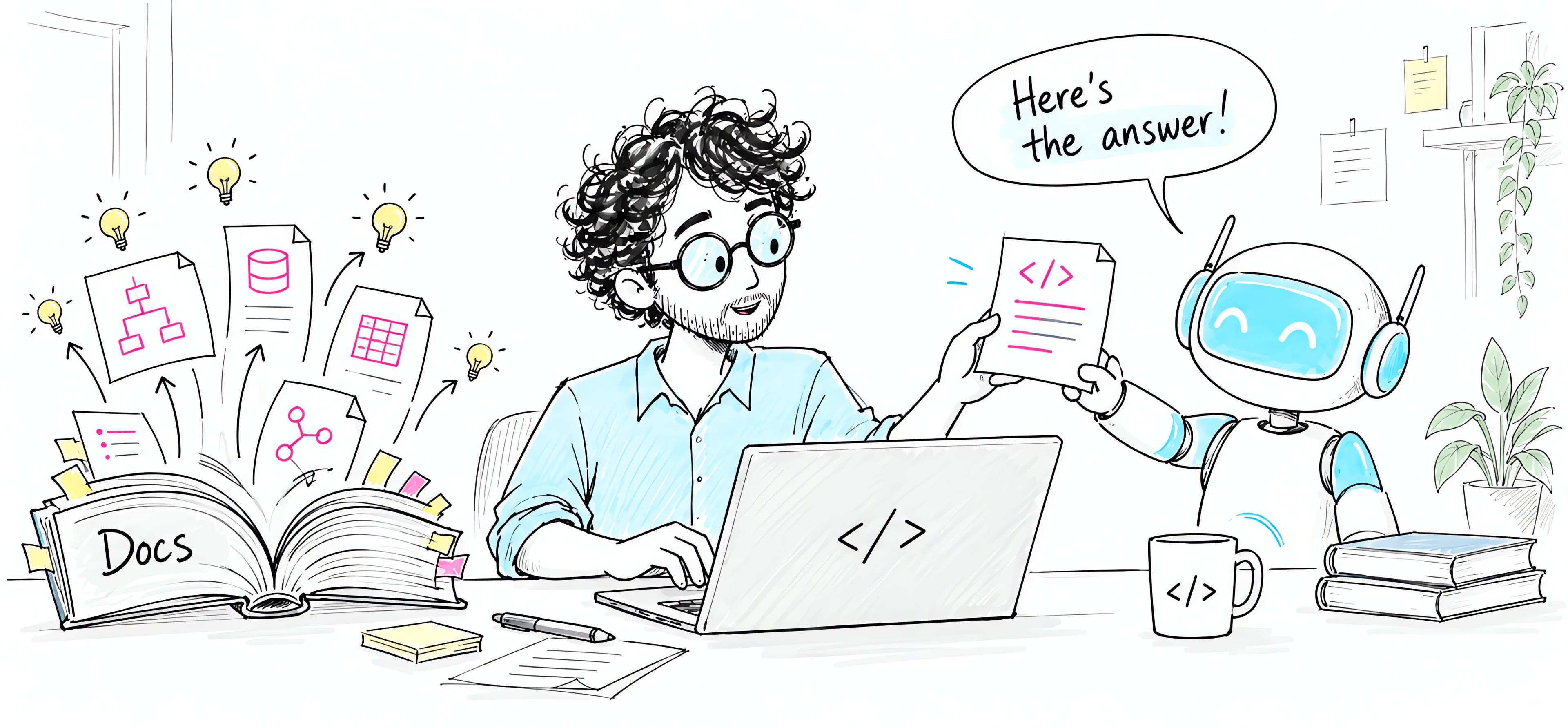
A developer can ask an assistant to generate a feature. A more deliberate approach gives the assistant relevant context, asks it to investigate before editing, breaks the work into manageable steps, and uses tests and review to evaluate the outcome.
This requires several connected skills: choosing the right tasks for AI, providing useful context, recognizing uncertainty, evaluating suggestions, and deciding when to stop delegating and investigate manually.
It also means understanding the limitations of different tools. A chat assistant, an IDE-integrated coding assistant, and an autonomous coding agent do not necessarily have the same access, capabilities, or risks.
The goal is not to create the longest prompt or automate every step. It is to use AI where it adds value while keeping important decisions and verification under control.
AI fluency is most useful when it sits on top of engineering fundamentals. Without those fundamentals, developers may struggle to recognize incorrect output. With them, AI can become a powerful way to explore solutions, learn unfamiliar technologies, and reduce repetitive work.
8. communication and technical judgment
Software development is rarely a purely individual activity. Engineers explain decisions, discuss requirements, review pull requests, and work with people who have different priorities and levels of technical knowledge.
AI can help draft documentation, summarize code changes, and explain technical concepts. But the developer still needs to communicate what a system should do, why a particular approach was chosen, and what risks remain.
Technical judgment also involves recognizing when the best answer is not to write more code. Sometimes the right solution is to simplify an existing feature, remove an unnecessary dependency, or clarify a requirement before implementation.
These decisions depend on understanding the problem and its consequences.
As AI makes it easier to generate multiple possible implementations, the ability to compare them and explain the trade-offs becomes increasingly useful. A technically correct solution is not automatically the most maintainable, secure, or appropriate solution.
Communication and judgment connect engineering work to its actual purpose: building software that other people can understand, use, and maintain.
What Should Developers Learn First?
Not every skill needs equal attention at every stage of a developer's career. A beginner building their first application has different priorities from an experienced engineer maintaining a large distributed system.
A sensible learning order is to establish programming fundamentals first, then build the skills needed to understand and verify real applications.
- If you are a beginner: Learn one programming language well enough to understand control flow, functions, data structures, errors, and debugging. Use AI to explain concepts, but practise solving problems without accepting every suggestion.
- If you can already build applications: Focus on reading unfamiliar code, writing tests, understanding APIs and databases, and tracing bugs across multiple files.
- If you work with AI agents regularly: Learn how to provide repository context, define acceptance criteria, inspect diffs, control tool permissions, and verify multi-file changes.
- If you work on complex systems: Develop deeper skills in architecture, performance, security, observability, and system reliability.
These priorities are not a rigid ranking. Their importance depends on the work you do. But they share a common foundation: understanding how software behaves and how to determine whether a change is safe.
Do not abandon programming fundamentals because AI can produce syntax. Fundamentals help you understand what the generated code means and whether it is doing the right thing.
The Engineer of the Future Is Not Just a Better Prompt Writer
AI will continue to change how developers implement features, explore unfamiliar code, and solve routine problems. Some tasks will require less manual effort, and new workflows will emerge as coding agents become more capable.
But no single skill guarantees that a developer will thrive in this environment. The strongest engineers will combine solid fundamentals with the ability to use AI effectively, understand complex systems, verify results, and make sound technical decisions.
The evidence does not suggest that every traditional engineering skill is suddenly becoming obsolete. Instead, AI adoption makes the relationship between code generation and software quality harder to ignore.
Learning to prompt AI is useful. Learning to understand its output is essential.
Because producing code is only the beginning of engineering. The real work is knowing what to build, how it should behave, and whether the result can be trusted.
"The less effort it takes to generate code, the more important it becomes to understand what that code is doing."