

Getting an application to work on your laptop feels like the finish line. Sometimes, it is where the real engineering begins.
AI coding tools have made it easier to turn an idea into a working interface, connect a database, and generate features through natural language. You can describe an application, watch an agent build it, and see a preview minutes later.
But a preview is not a production system.
What happens when real users sign up? What if the database goes down, an API key leaks, or a deployment breaks the application for everyone? These are the problems that separate building software from operating it.
That is where the distinction between vibe coding and vibe deploying becomes useful.
1. what is vibe coding?
Most people enjoy the moment when an idea finally becomes something they can click.
Vibe coding is an approach to software development where you describe what you want in natural language and use AI to generate and refine the code. Instead of writing every component manually, you guide an AI tool through prompts, feedback, and iterations. Google Cloud's explanation of vibe coding provides a useful overview of this approach.
Imagine asking an AI agent to build a student dashboard. It creates the interface, adds authentication, connects a database, and generates a few useful features. You test it locally, request some design changes, and eventually get something that looks ready to launch.
That is meaningful progress. You have reduced the distance between an idea and a working prototype.
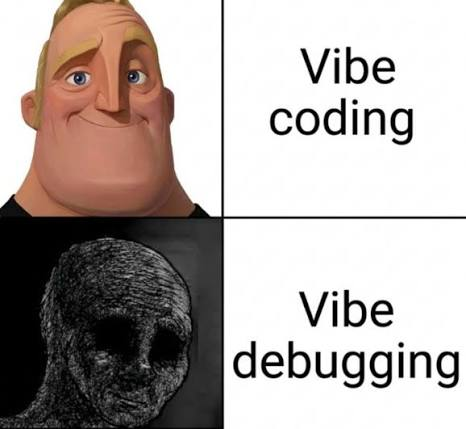
However, the application may only have been tested with a handful of sample users. Its authentication might have gaps, its database queries might fail under unexpected conditions, and its error handling might be incomplete.
Working code proves that a path exists. It does not prove that the system is ready for real users.
2. what is vibe deploying?
Creating an application is one challenge. Making it reliable after launch is another.
Vibe deploying describes using AI-assisted workflows to help take an application from a working codebase to a live environment. This can include configuring hosting, setting environment variables, preparing databases, running checks, deploying releases, and investigating failures.
Imagine that same student dashboard is ready to launch. An AI agent can help configure the hosting platform, connect the production database, set up a deployment workflow, and publish the application. You might complete much of this through a few instructions instead of manually navigating every configuration screen.
But the deployment button is only one step.
The application also needs correct permissions, secure credentials, appropriate database access, and a way to detect failures after launch. If a release introduces a serious bug, someone must know how to stop the damage and restore a working version.
Vibe deploying is not simply asking AI to publish your code. It is using AI to manage the journey from a working application to a system that can survive real-world conditions.
3. the difference between a preview and production
A preview shows what your application can do under controlled conditions. Production reveals what happens when reality becomes unpredictable.
| Vibe coding | Vibe deploying |
|---|---|
| Generates features and interfaces | Prepares the application to run reliably |
| Focuses on whether functionality works | Focuses on correctness under real conditions |
| Uses local data or test accounts | Uses production configuration and real user data |
| Fixes visible bugs during development | Detects and handles failures after release |
| Measures progress through working features | Measures reliability, security, and user impact |
Consider a login page generated by an AI agent. It may look perfect and successfully authenticate your test account. Yet it might expose sensitive information through logs, mishandle expired sessions, or allow users to access records they do not own.
Those problems are not necessarily visible in a preview.
A production-ready application must be evaluated against more than its appearance. Authentication, authorization, input validation, database behavior, and failure handling all need appropriate checks.
The important distinction is not that coding and deploying are separate worlds. They are connected stages with different responsibilities.
4. what must happen after AI writes the code?
A reliable launch depends on several engineering practices that should not disappear simply because an AI agent can automate parts of the workflow.
Testing comes first. Run unit tests, integration tests, and relevant end-to-end checks. Verify important user journeys, including failure cases. A successful build is not the same as a correct application.
Security needs deliberate attention. Review authentication, authorization, dependencies, database permissions, and exposed endpoints. Keep API keys and other secrets out of source code. Use appropriate secret-management facilities and grant services only the access they need.
Configuration must match the environment. Development, staging, and production often use different credentials, databases, domains, and service settings. A configuration that works locally can fail in production if those differences are ignored.
Deployments need a recovery plan. Know how to identify a broken release, inspect logs, roll back an application version, and handle database changes that cannot simply be reversed.
These practices are not unique to AI-generated software. AI changes how quickly code can be produced, which makes a disciplined process for checking and operating that code even more important.
For further reading, the Cloudflare reference architecture for AI vibe coding platforms describes the infrastructure concerns involved in safely executing generated code, deploying applications, and observing their behavior.
5. can AI agents handle deployment themselves?
Automation can remove a surprising amount of manual work. It should not remove the boundaries around that work.
An AI agent with appropriate tools can run tests, inspect build logs, create configuration files, prepare deployment workflows, and diagnose errors. Depending on the platform and its permissions, it may also deploy an application or help reverse a release.
The important question is what the agent is allowed to do.
Should it be able to delete a production database while fixing a migration? Should it deploy a change that disables authentication because that makes a test pass? Should it publish a release without checking whether the tests succeeded?
These are not merely prompting problems. They are questions about permissions, safeguards, and system design.
A more reliable workflow gives the agent a defined task, access to the tools it needs, automated checks, and clear limits around sensitive actions. High-impact changes can require human approval, while routine and reversible steps can be automated.
The goal is not to make AI ask permission for every command. It is to make sure the cost of a mistake stays within acceptable limits.
6. a practical workflow for vibe deploying
The best way to deploy AI-generated code is to make the process repeatable instead of relying on a successful sequence of prompts.
A simple workflow can look like this:
- Build in development. Let the AI agent implement a small, clearly defined feature.
- Review the changes. Inspect the diff, dependencies, permissions, and any unexpected modifications.
- Run automated checks. Execute tests, linting, type checks, and relevant security scans.
- Deploy to staging. Test the application in an environment that resembles production without immediately exposing changes to everyone.
- Promote deliberately. Deploy to production only when the required checks pass and any necessary approvals are complete.
- Observe the release. Check logs, errors, latency, and important application metrics after deployment.
- Recover when necessary. Maintain a tested rollback procedure and a plan for data migrations or other changes that cannot be easily undone.
This workflow can be implemented through CI/CD tools, deployment platforms, and AI agents working together. The exact tools matter less than the guarantees they provide.
For example, an agent can propose a fix for a failing test, but the test should still determine whether the fix works. An agent can prepare a deployment, but the deployment pipeline should enforce the rules for releasing it.
Let AI perform the work. Let independent checks establish whether the work is safe to ship.
7. why this matters for AI-native engineering
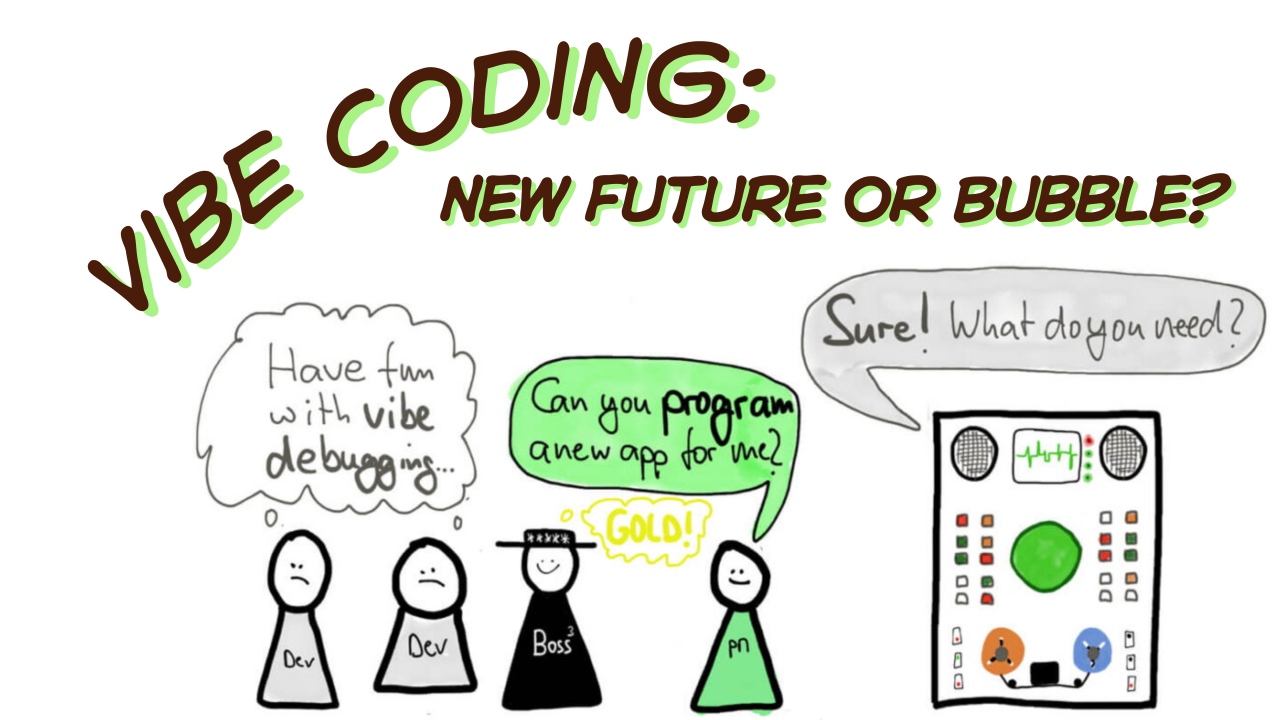
The biggest shift is not that developers can generate more code. It is that software teams can delegate more of the development lifecycle to AI systems.
When code generation becomes faster, implementation is no longer the only bottleneck. Testing, integration, deployment safety, observability, and maintenance become increasingly important parts of the workflow.
This is also why AI-native engineering requires more than a powerful coding model. It needs an environment where agents can access the right context, use tools safely, receive meaningful feedback, and verify the results of their actions.
An agent that writes code without being able to test it has limited evidence that its work is correct. An agent that can deploy without monitoring or recovery mechanisms can turn a small mistake into a production incident.
The engineering challenge is to connect these capabilities without giving automation unlimited authority.
That means designing workflows in which code generation, validation, deployment, and monitoring reinforce one another. Humans remain responsible for the system's goals, risk tolerance, and important decisions, even as agents take on more execution.
conclusion: shipping is the real test
Vibe coding makes it easier to create software. Vibe deploying makes it easier to move that software into the world. Neither removes the need to understand what is being built, what could fail, and how failures will be handled.
A beautiful interface can attract the first user. A reliable system gives that user a reason to return.
As AI agents become more capable, the advantage will not belong only to the people who can generate the most code or build the fastest prototype. It will increasingly belong to those who can turn generated code into software that remains secure, observable, recoverable, and useful after launch.
The future of AI-native engineering is not just about making software easier to create. It is about making the entire journey from idea to reliable production easier to trust.
"Writing the code is how an application begins. Taking responsibility for what happens next is how software becomes a product."